


01STAKE
EXAMPLE STAKE100 pts
Choose an amount
A stake is set before the round begins. In the demo below, enter 100 points and select Start demo round.
Learn the rules of a crash multiplier round, check a cash-out calculation and practise with virtual points. This independent information site explains the mechanics; it does not operate the game or provide APK downloads.
Demo uses virtual points. No account needed.
Follow the stake, multiplier and accepted cash-out in a 100-point example.
Open demoA stake is set before the round begins. In the demo below, enter 100 points and select Start demo round.
At 1.78×, a 100-point stake has a total return of 178 points. That amount is only collected if you cash out before the crash.
Cash out at 1.78× to receive 178 points, including the original 100. If the round crashes first, the return is zero.
Each real round is independent. Previous crash points don’t tell you when to cash out next.
Browser demo
Captured from this site's browser demo. Scripted rounds and virtual points only.
Try it below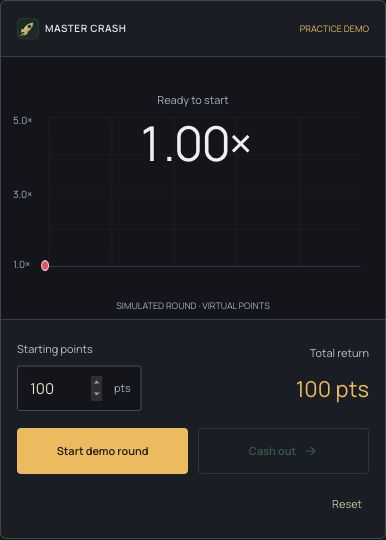
Choose an amount before the scripted round begins.
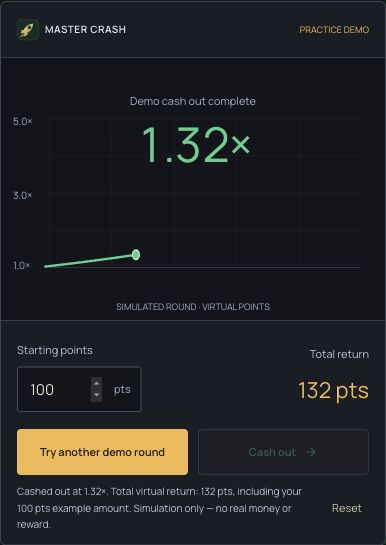
Total return includes the starting points used in the example.
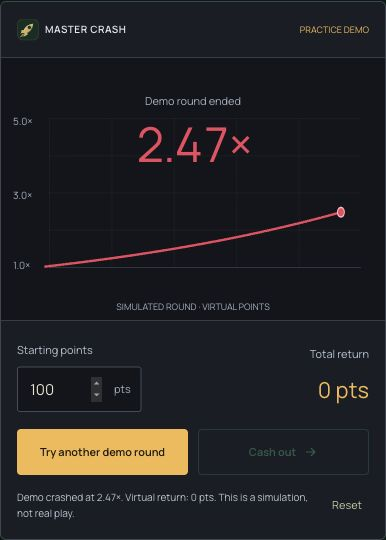
A crash before cash-out returns zero in the demo.
These captures show this website's demonstration, rather than an app download or a live game account. Select an image to view it at full size.
Choose 10–1,000 virtual points, start a round, then press Cash out. The result shows the total return, including your starting amount.
Enter your starting points.
02Select Start demo round.
03Cash out before the round ends.
This demo uses a fixed set of example crash points. It shows how cash-out works; it does not simulate the odds of a real game.
 MASTER CRASHPRACTICE DEMO
Virtual points only.
Multipliers, cash-out settings and previous results.
All guides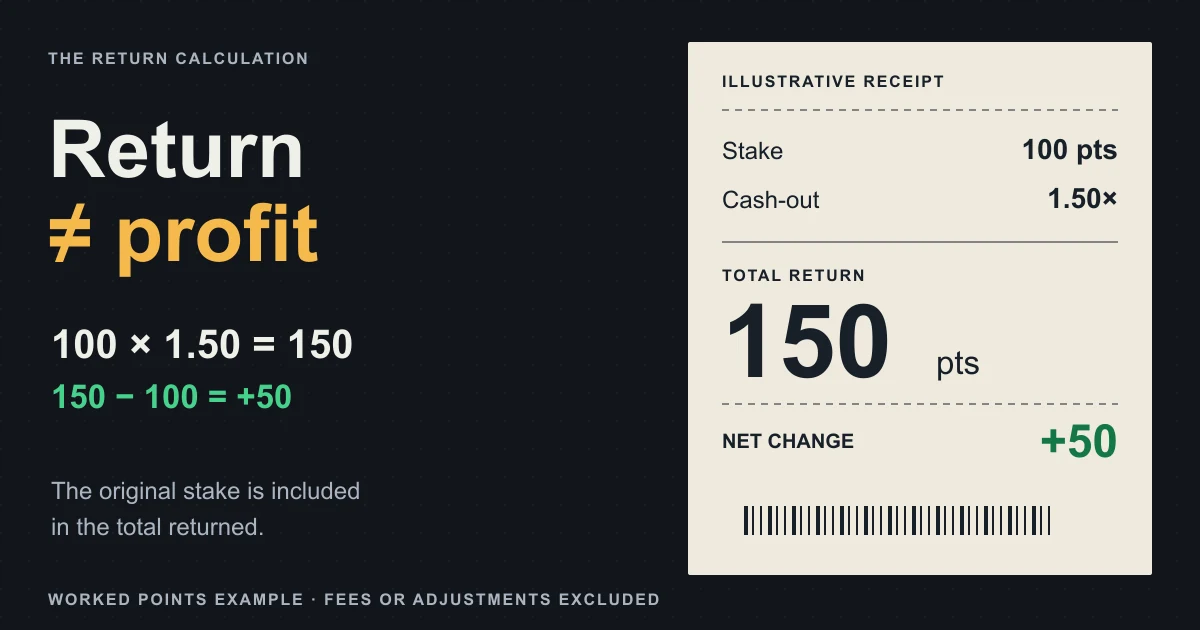
A worked example of the total return and the amount gained above your stake.
Read the example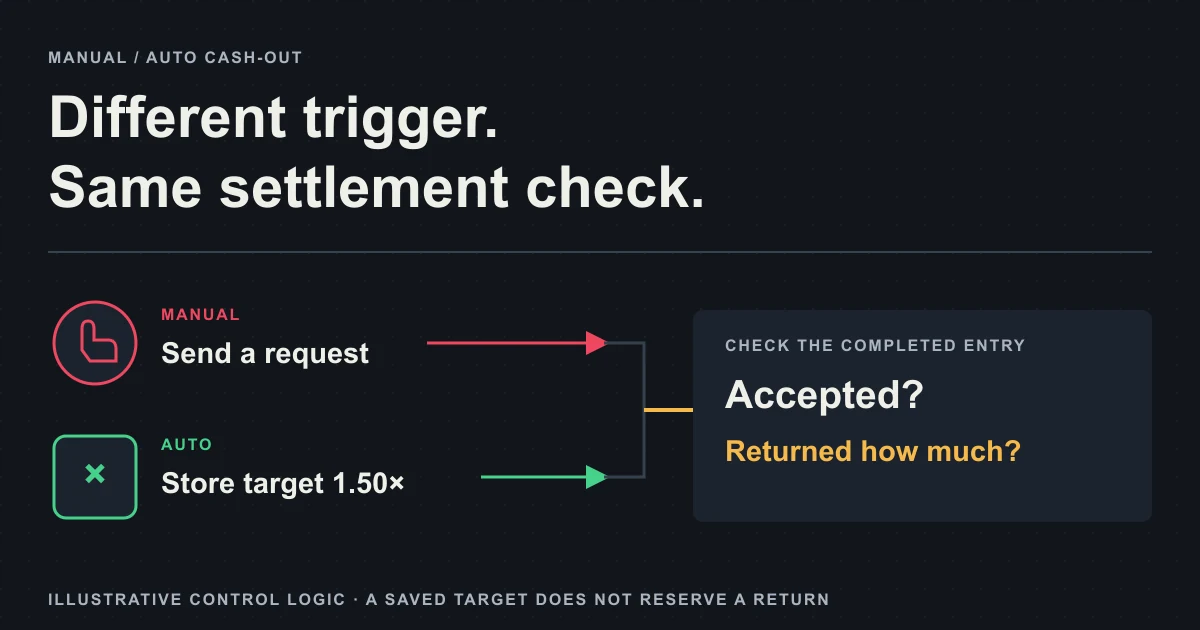
What a preset target does, and why a round can still end before reaching it.
Read about cash-out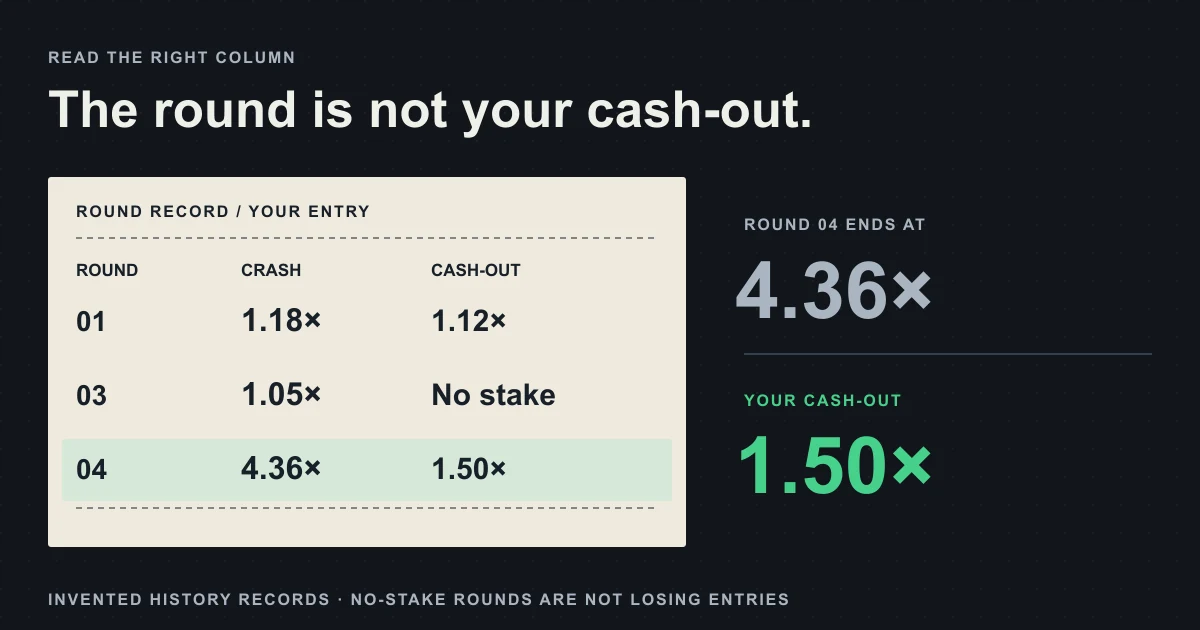
Review previous results and understand why they don’t predict the next round.
Read about historyWorked examples and answers to common questions.
All articles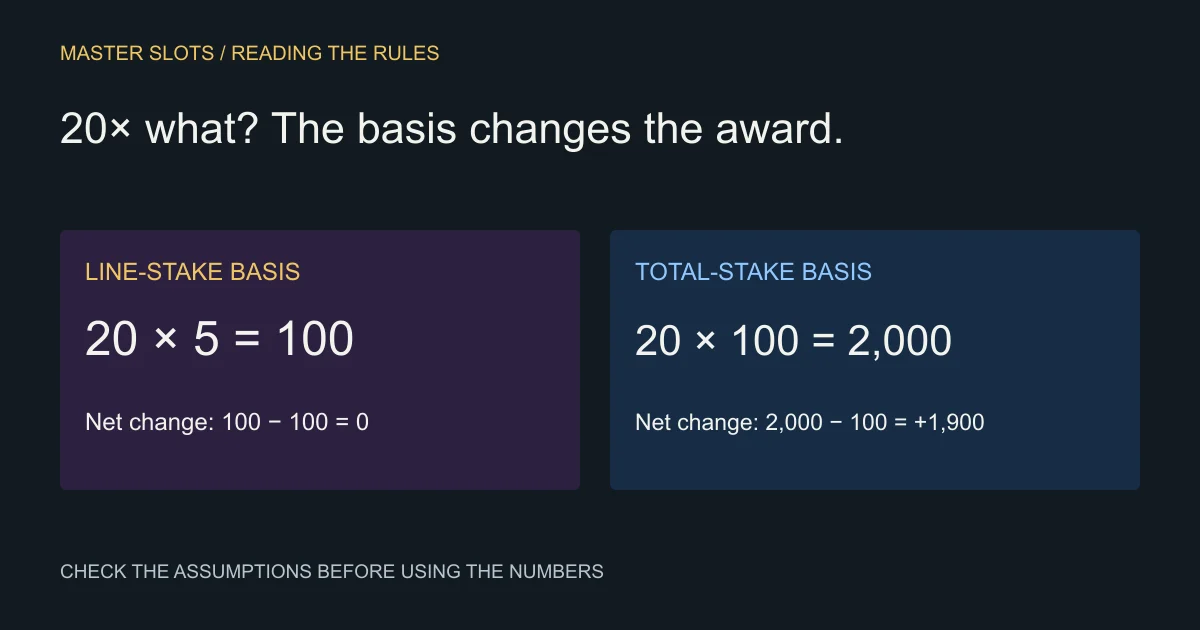 Master SlotsBy Naina Kapoor
A 20× symbol award can mean different amounts depending on its stake basis. Work through paylines, scatter awards and a complete spin calculation.
Read article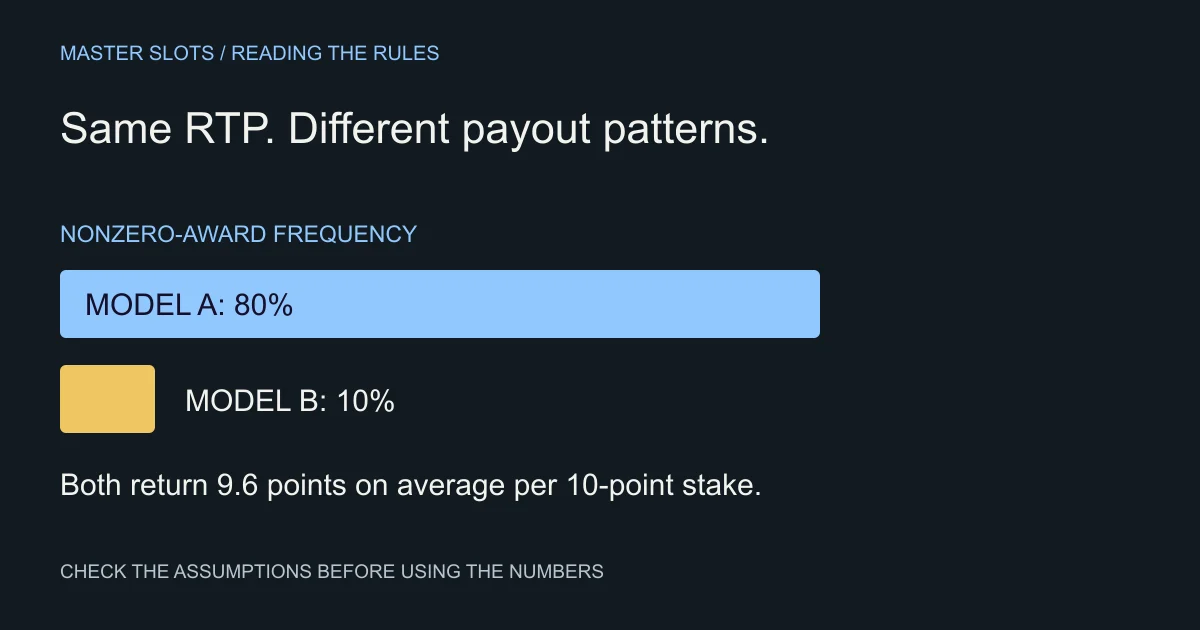 Master SlotsBy Naina Kapoor
Separate theoretical RTP, a paying spin and a profitable spin. Two invented payout models show why equal RTP does not mean equal session results.
Read article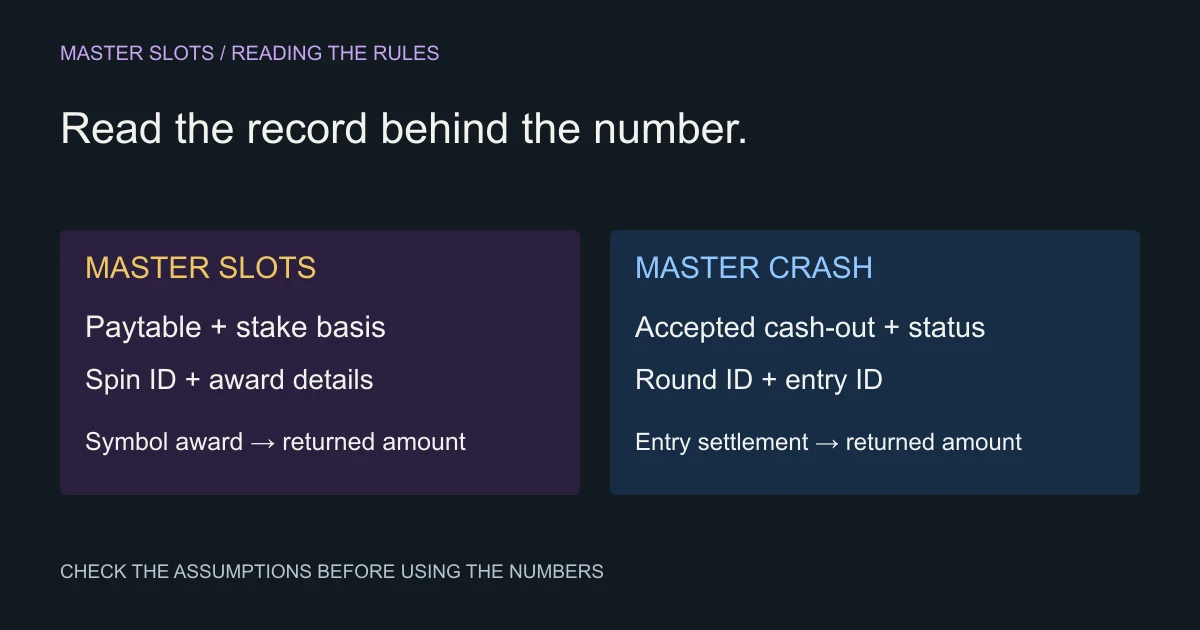 Master SlotsBy Meera Joshi
Compare reel awards with accepted cash-outs, spin records with round records, and demo evidence with live settlement. Similar branding is not proof of a shared account.
Read article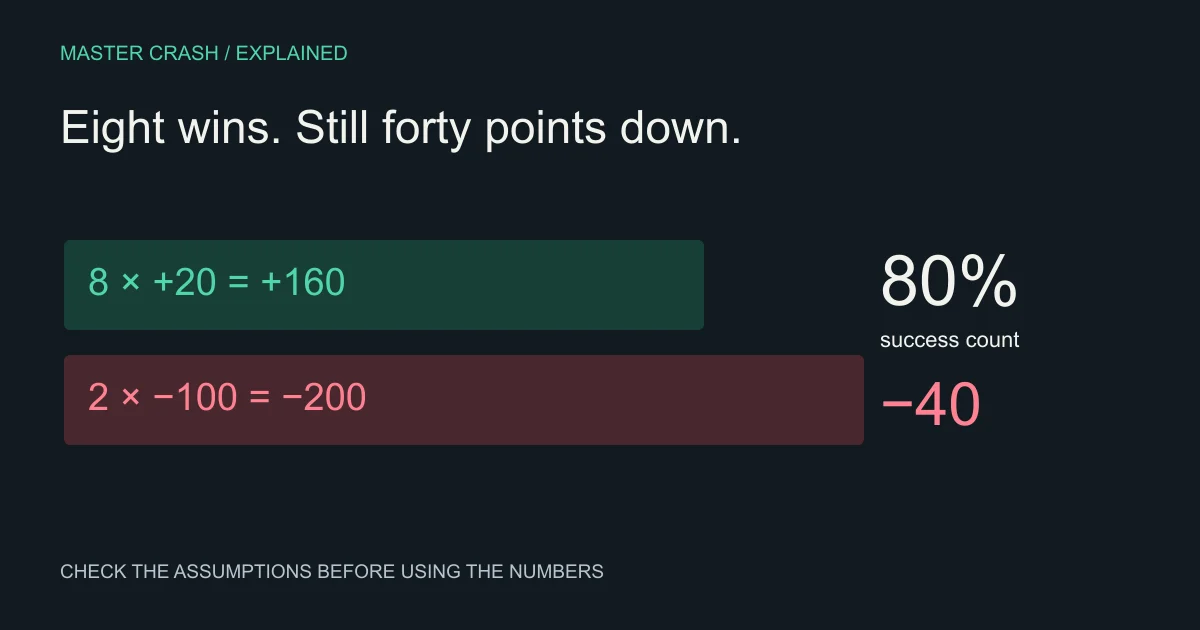 Math & fairnessBy Naina Kapoor
Eight wins do not guarantee a profit. Compare equal and changing stakes, total returns and a complete ten-entry ledger in this worked Crash example.
Read article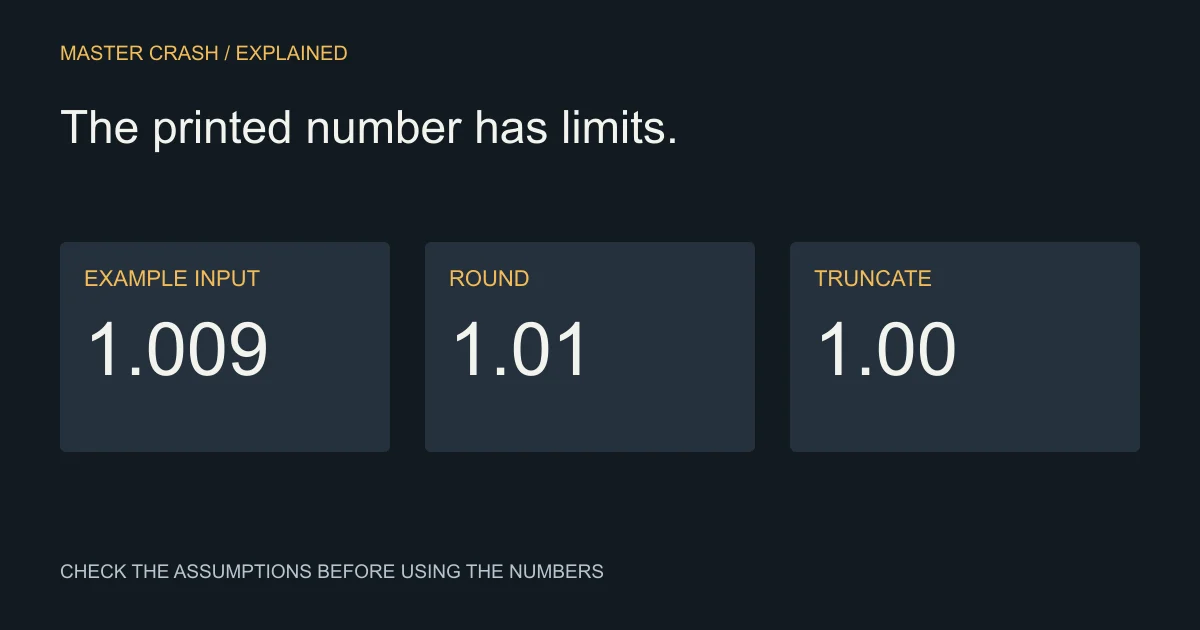 Records & evidenceBy Arjun Mehta
A 1.00× crash label is not a cash-out receipt. Check entry acceptance, displayed precision, tie rules and settlement before interpreting the result.
Read article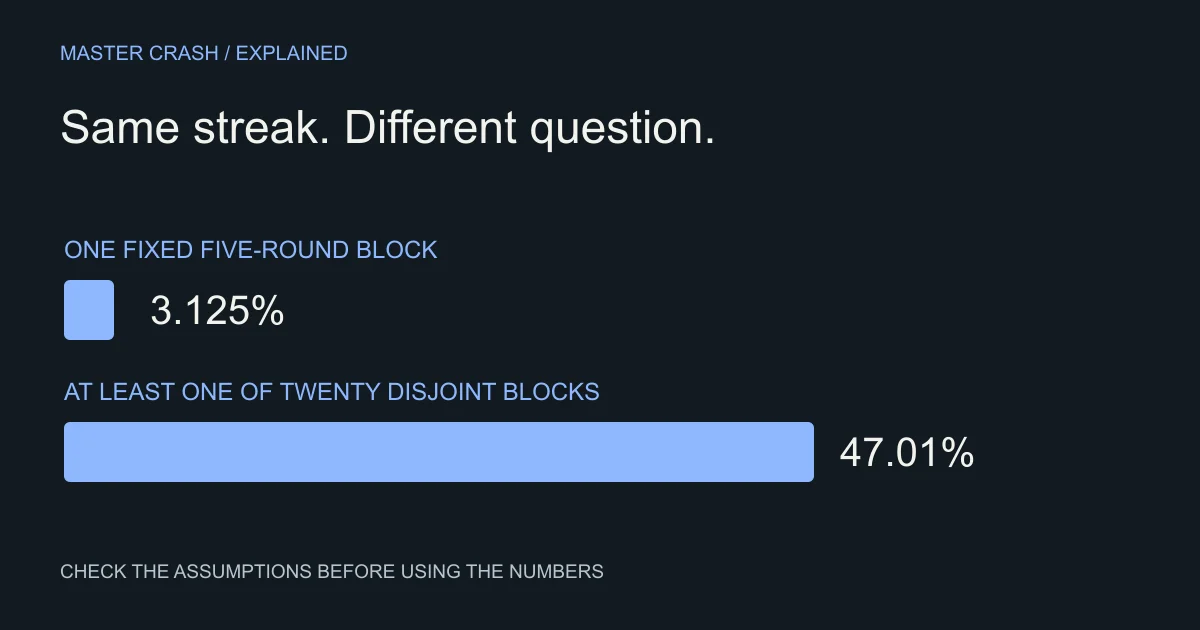 Math & fairnessBy Naina Kapoor
Five losses in a chosen block and a streak somewhere in a long history are different questions. Work through the probabilities without predicting a round.
Read articleDecide how much time and money you can spend, and stop at that limit. Don’t borrow to play or increase your stake to recover a loss.
A round starts at 1.00× and the multiplier rises until a crash ends it. An accepted cash-out returns the stake multiplied by the recorded value; an entry that crashes first returns zero. The Master Crash game mechanics guide explains the stages and records to check.
Yes. The free demo on this page uses virtual points and scripted outcomes, with no game account or deposits. Use it to practise the controls. It does not reproduce the live app’s odds or account settlement.
Multiply the stake by the accepted cash-out multiplier. For example, 100 points at 1.50× returns 150 points in total: the original 100 plus a 50-point net gain. An entry that crashes before cash-out returns zero. The cash-out return calculations show how to include losses and rounding.
No. A sequence of low or high multipliers does not establish the next result. Use history to check a completed round, your accepted cash-out and the settled return. See how to read Crash round history for a complete example.
Manual cash-out sends a request when you press the control. Auto cash-out, where supported, uses a target selected earlier; the round can still crash before reaching it. Read the manual vs auto cash-out comparison for worked examples and confirmation checks.