First make sure you are comparing the intended products
Master Games lists Master Slots and Master Crash as separate game categories on its site. That publisher’s description is a reference for its own products, not proof that every app with either name shares the same operator or wallet.
Record the developer or operator, website, application identifier and relevant game title. The Google Play listing linked in this website’s footer should not be assumed to share an account with another service merely because both use “Master”. We have not verified account compatibility between those services.
This comparison concerns game mechanics and the evidence needed to read results. It does not recommend a download, establish which app is legally available to a reader, or rank either game as a way to earn money.
The important difference is the settlement rule
| Question | Slot entry | Crash entry |
|---|---|---|
| What describes the result? | Eligible symbol combination or feature award | Round crash point and personal entry settlement |
| What sets the return? | Paytable and its specified stake basis | Accepted cash-out multiplier, or loss/refund status |
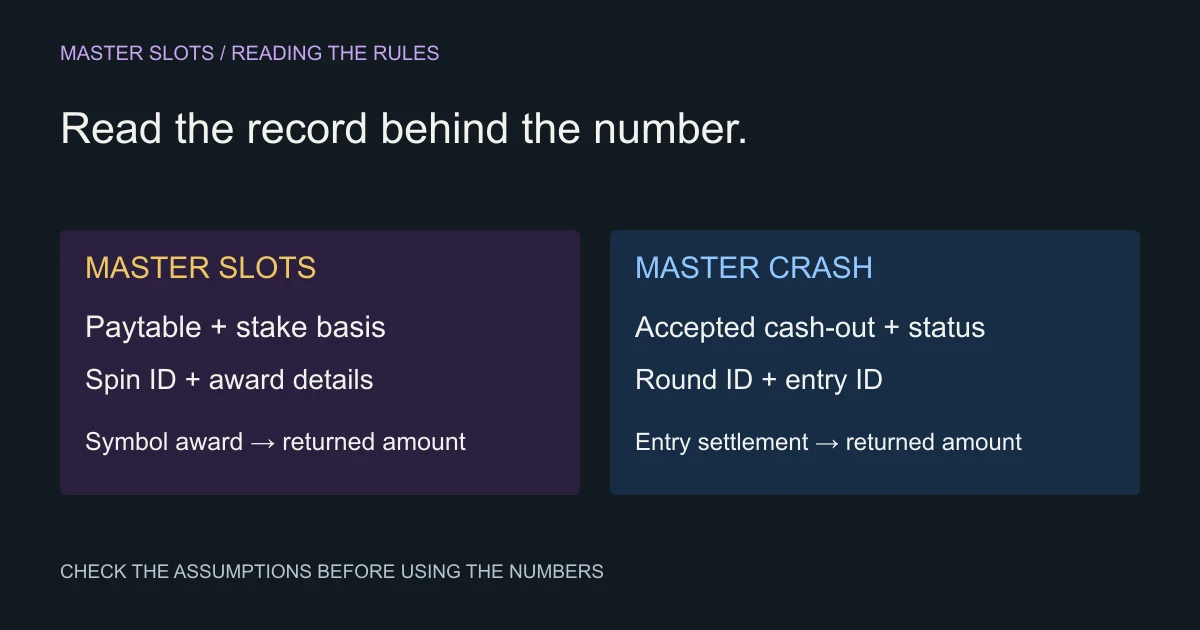
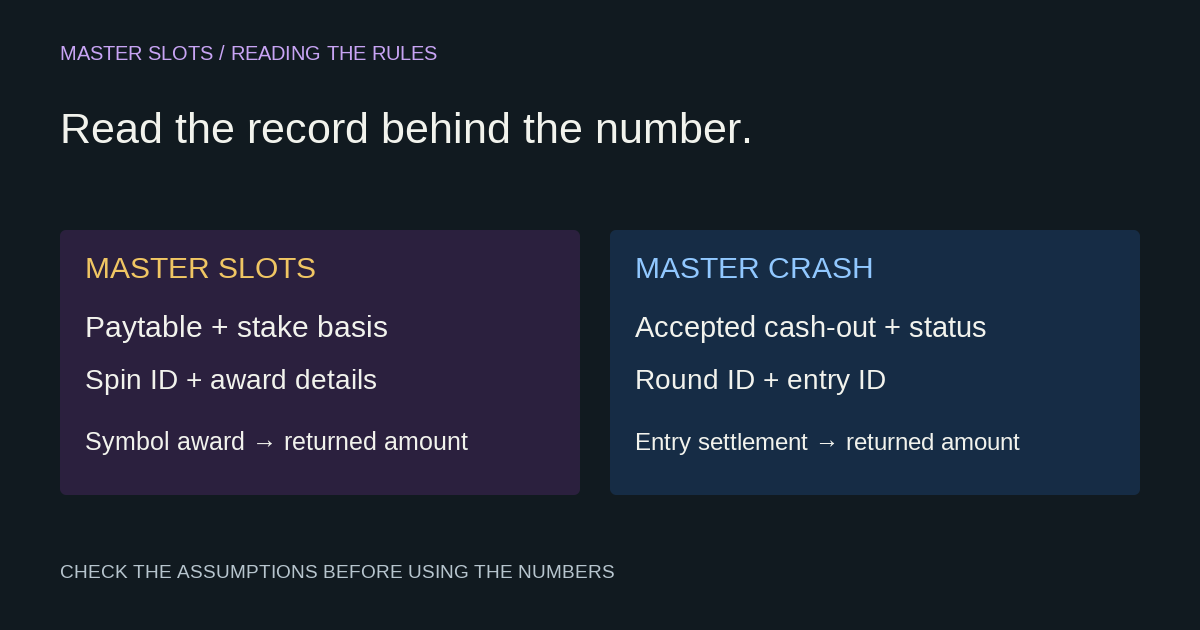
| What record helps? | Spin ID, stake, award breakdown | Round ID, entry ID, accepted cash-out |
| What can a display omit? | Line basis, feature totals, pending awards | Request status, acceptance time, final credit |
In an ordinary reel game, trying to time the spinning animation is not a substitute for reading the result-generation rules. A stop-animation control may only shorten the presentation. Do not assume it offers a choice equivalent to a Crash cash-out.
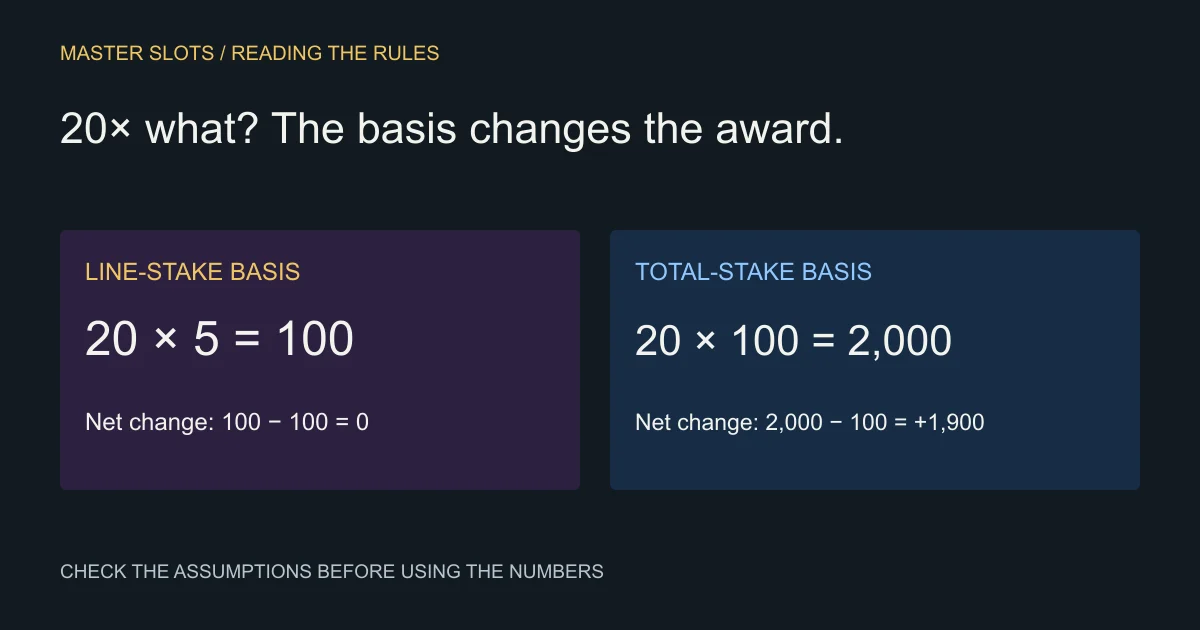
In Crash, an intended exit and an accepted exit can differ. A target setting also needs confirmation under the product’s rules. The manual and automatic cash-out guide separates the setting from the completed result; the Slots paytable guide separates the displayed award multiplier from its stake basis.
Different paths can produce the same net result
Take two unrelated, invented 100-point entries. A slot’s eligible awards total 150 points. A Crash entry has an accepted cash-out at 1.50× and returns 150 points. Both produce a 50-point net gain before adjustments.
The matching arithmetic does not imply matching probabilities. The slot requires the probabilities of its award combinations and features; the Crash result requires its outcome model and settlement conditions. Two screenshots showing +50 reveal none of those distributions.
A slot award of 50 on a 100-point spin is a 50-point loss even if the interface celebrates it. A normally settled Crash entry without a successful cash-out can return zero, losing the whole stake. To compare completed sessions, use stakes and gross returns, as in the balance-reconciliation example, rather than counting “win” labels.
Automation labels do not describe the same instruction
If offered, automatic spins concern submitting further slot entries. A Crash auto cash-out target concerns settling an existing entry. Automatic entry and automatic exit are different permissions. A product may have one, both or neither, and availability can depend on the version and jurisdiction.
Check what is submitted, which stake is used, how stopping works and whether a setting persists across sessions. Do not infer a server-side instruction from a value still visible on a disconnected screen. A pending animation is not a completed account record.
When a connection fails, retain identifiers and obtain the final settlement before adding another explanation. Our cash-out evidence guide distinguishes a local click from acknowledgement and credit. For a slot, the comparable question is whether the spin was accepted and how its award was settled.
A demo answers a narrower question
A demo can help locate controls and practise reading returned amounts. It does not automatically establish the live result distribution, payment handling or interruption rules. First determine whether it is the operator’s corresponding free-play game or an independently built tutorial.
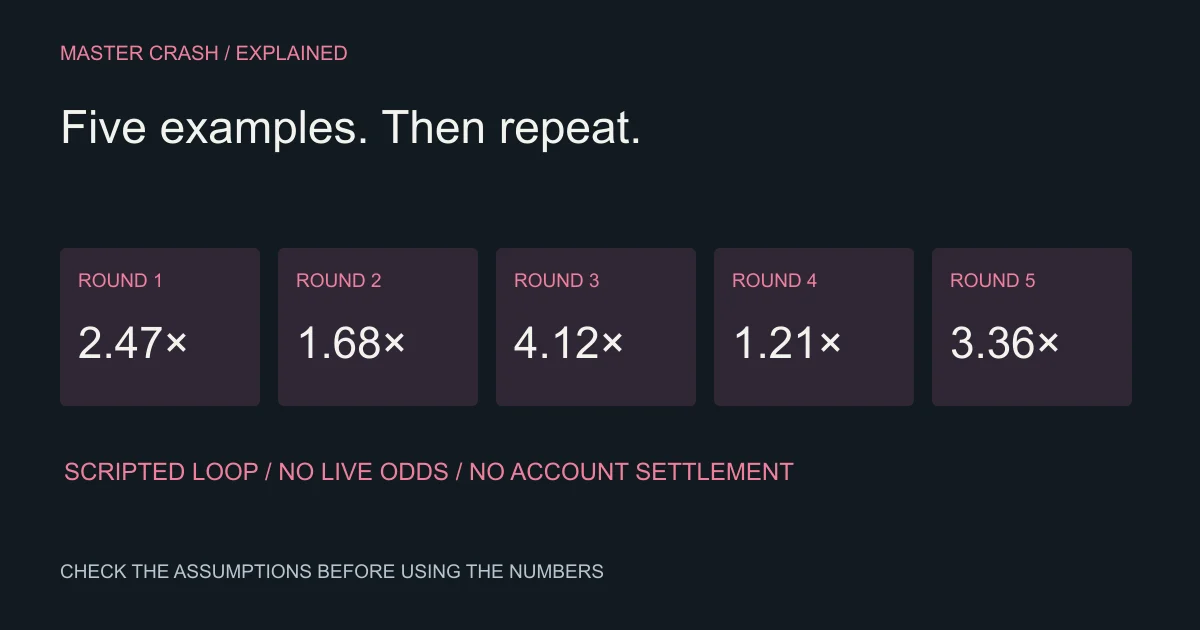
This site’s Crash demonstration uses a fixed loop of example outcomes and virtual points. It is not a Master Slots simulator. The demo limitations article explains exactly what the loop can teach and what it cannot test.
For a useful comparison, write down the rule that determines each return, the evidence that confirms settlement, and the assumptions behind any probability claim. If those fields are missing, a visual resemblance or a successful demo run does not fill them in. For the statistical distinction between frequent awards and expected return, continue with Master Slots RTP and hit frequency.
Sources & further reading
- Master Games: Master Slots product description (publisher claims)
- Gambling Commission RTS 3: explaining rules and payouts (Great Britain scope)
Worked examples are illustrative. Operator documentation describes that operator’s product and is not an independent audit of the games discussed here.