The sequence on this site is deliberately visible
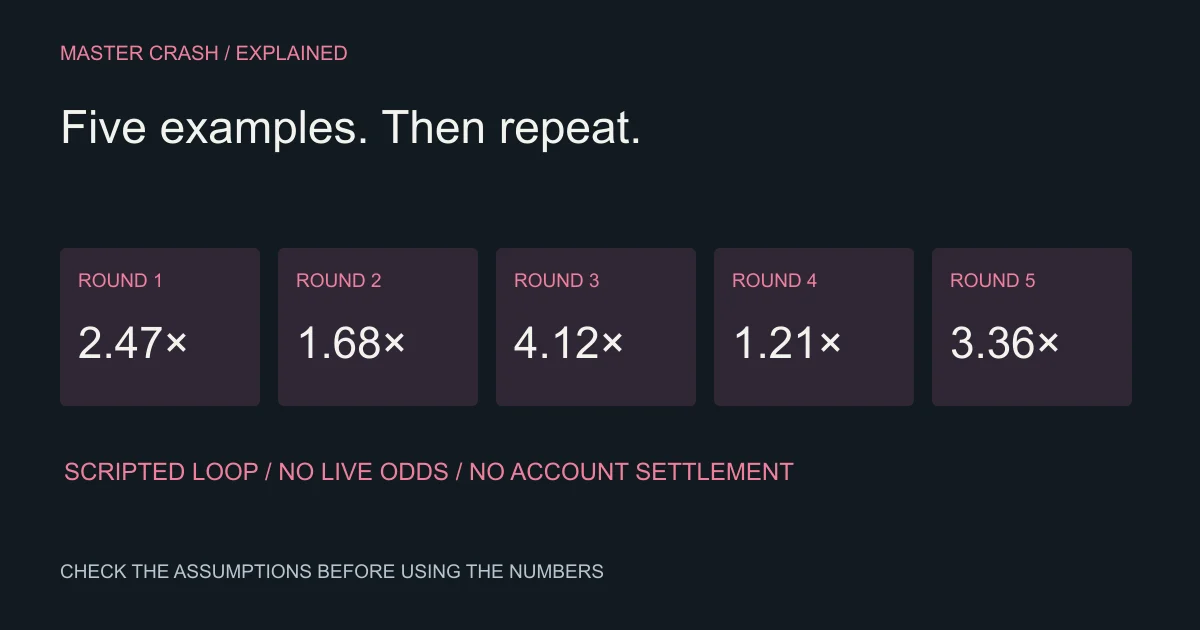
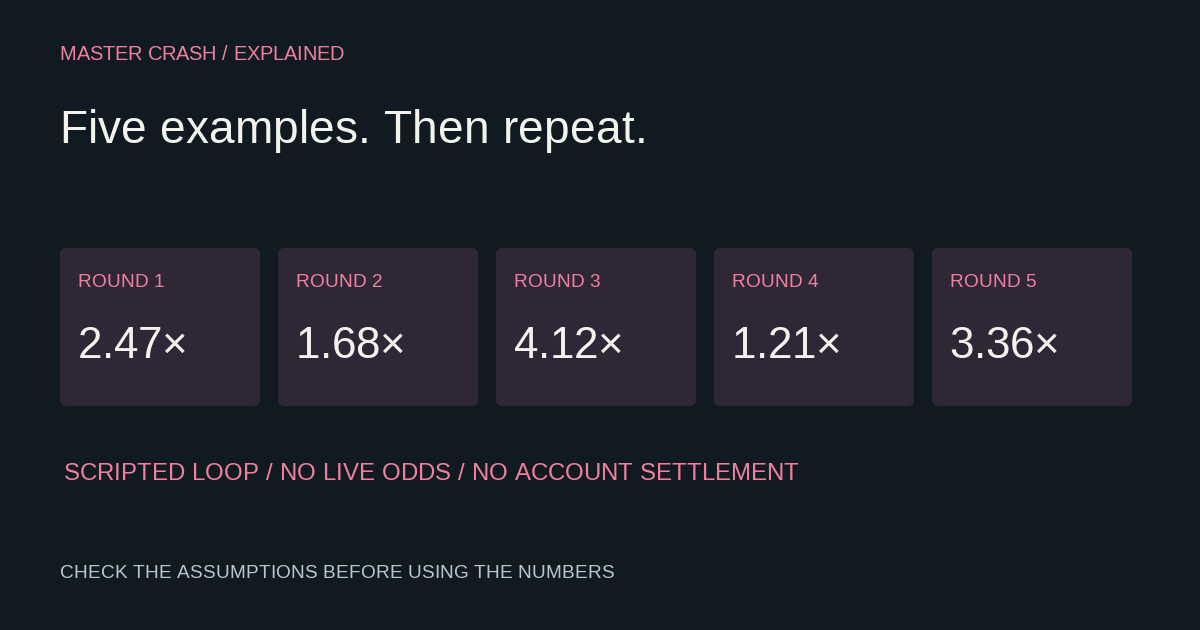
Our browser code uses these crash points in order: 2.47×, 1.68×, 4.12×, 1.21× and 3.36×. It then repeats. Resetting the demo returns it to the start of that sequence. The same code is served publicly as a local website asset, so this behaviour can be checked directly.
| Demo round in the loop | Scripted crash point |
|---|---|
| 1 | 2.47× |
| 2 | 1.68× |
| 3 | 4.12× |
| 4 | 1.21× |
| 5 | 3.36× |
There is no account login, deposit or real prize. The demo runs on the page and shows how a starting amount, rising multiplier and accepted local action fit together. Its fixed results make explanations reproducible, but make it unsuitable for estimating a live game’s distribution.
The arithmetic transfers; the sequence does not
A 100-point entry settled at 1.50× has a gross return of 150 points and a net increase of 50 before adjustments. That multiplication is useful beyond the demo. So is the distinction between a return including the stake and the gain above it.
By contrast, a demo session’s win rate is tied to its programmed sequence and your actions within it. Repeating the loop 100 times does not create 500 independent observations of a live product. It repeats the same five teaching cases. A larger spreadsheet does not remove that limitation.
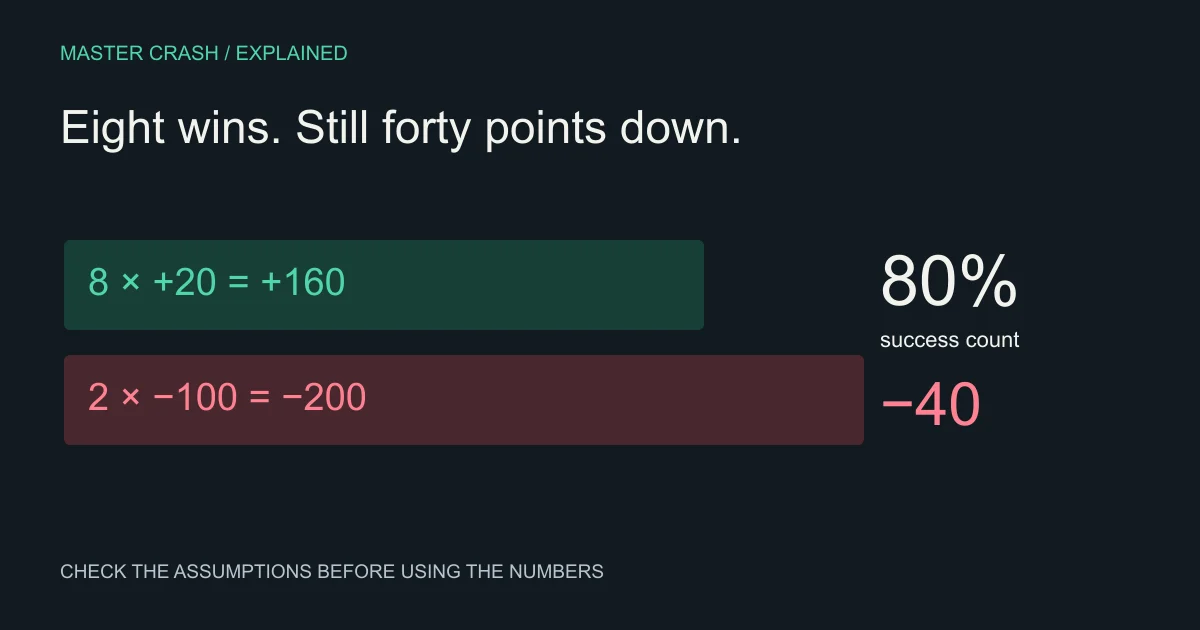
For checking arithmetic without the animation, use the standalone return calculator. For understanding why a high success count can still produce a loss, follow the ten-entry win-rate example. Neither tool estimates your chance of winning.
A local animation cannot test a settlement system
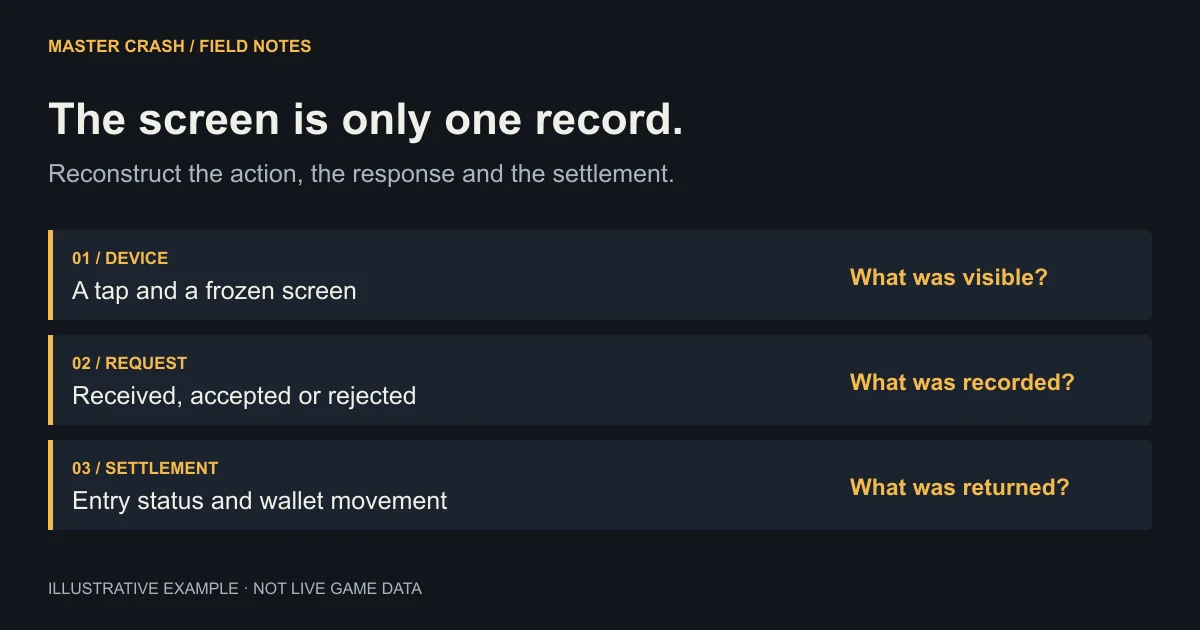
Real systems have entry acceptance records, requests sent across a network, server processing and account settlement. Our demo does not contact that infrastructure. A responsive local button is therefore no evidence that the same action would arrive in time at a remote service.
It also cannot test withdrawal handling, identity checks, disputed transactions or how a live product treats an interrupted round. A demonstration balance is just page state. Treating it as evidence that an operator pays users would confuse an interface example with an account record.
A video has a further limitation: you may not know which attempts were omitted or whether it was edited. A sequence that looks easy in a clip still needs its source, rules and observation method identified before anyone can draw a broader conclusion.
Not every page labelled “demo” uses the same model
Some demos are corresponding free-play versions supplied by an operator. Others are tutorials, animations or independently coded examples such as this one. Ask which kind you are viewing before comparing results. A similar colour scheme or rocket graphic does not answer that question.
For a regulatory comparison, the UK Gambling Commission’s RTS 6 addresses corresponding free-play and money-play games on the same facilities, including accurate representation of winning likelihood and prize distribution. That standard is a Great Britain reference within its stated scope. It does not certify this independent tutorial or establish how any named Master Crash app generates results.
Useful documentation identifies the provider, product version, result model and any deliberate differences from the corresponding game. If those details are missing, the honest conclusion is that the relationship has not been established.
A small, useful learning task
Use the tutorial to identify the stake, watch a local cash-out confirmation and calculate the returned amount. Then compare a successful entry with a zero-return loss. Stop there: memorising the sequence or trying to infer live RTP from it adds no evidence.
The demo walkthrough explains the controls. If your question concerns an actual missing cash-out, use the request and settlement evidence checklist instead. That question needs records from the service involved, not another run of a local animation.
Moving between game types needs another distinction: Master Slots and Master Crash use different payout and settlement rules, even when their screens both display multipliers.
Sources & further reading
- This site’s browser demo code: fixed outcomes and reset behaviour
- Gambling Commission RTS 6: result determination for play-for-free games
Worked examples are illustrative. Operator documentation describes that operator’s product and is not an independent audit of the games discussed here.